Government ID, Smart Cards, Identification and Authentication

Dutch researchers publish Mifare hack

Tuesday, October 7, 2008

Hackers from the Dutch Radboud University Nijmegen gave a presentation on how to break the encryption with some older contactless smart cards, according to a news report on InfoWorld.com. The researchers presented their findings during the Esorics security conference in Malaga, Spain.

In a paper released detailing the research, the hackers say they discovered the workings of the chip by analyzing communication between the chip and the reader and found out the cryptographic protocol. They also used previously released research of similar encryption hacks.


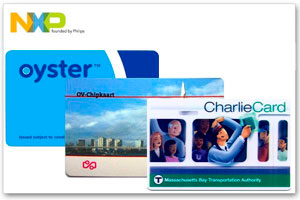
The MIFARE Classic line, the line the hackers broke, includes the MIFARE 1K, MIFARE 4K and MIFARE Mini products. They are used worldwide in transit fare collection systems, access control solutions, and government ID systems. Large issuers include transit projects such as London’s Oyster program, The Netherlands’ OV-chipkaart, and Boston’s Charlie Card.

NXP sued the hackers in July to prevent the research from being released. NXP argued that the research would irresponsibly expose the MIFARE Classic to hacking, adversely affecting public transit and other systems using the chip. The researchers responded that NXP has been allowed ample time to fix the problems, pointing out that clones of the chip have been available since 2004, thus indicating a public knowledge of its inner workings for at least that long.

A Dutch court rejected NXP’s request to prevent the publication of the study of ruling that freedom of speech outweighs NXP’s commercial interests. The judge argued that freedom of speech applies to scientific research as well as individuals.

See our previous coverage of the Mifare Classic hack here[end] 

The Smart Card Alliance Transportation Council has published a white paper examining how the transit industry can best make use of NFC technology.

“One of the major challenges facing transit agencies today is how to capitalize on the ever-growing popularity of mobile phones with a solid mobile strategy,” said Transportation Council Chairman Craig Roberts. “This white paper builds on the knowledge base developed in earlier white papers to foster a greater understanding of NFC technology, explain its role in the transit industry, and shed light on key issues facing the transit industry in developing a mobile strategy.”

read more »

Swedish producer of contactless smart card readers and terminals, Arcontia Technology announced that one of the largest bus company providers based in Johor Bhru, Malaysia has integrated onboard light bus validators from Arcontia into their ticketing system.

read more »

Idesco announced that it has updated and enhanced its DESCoder software package, offering security providers and end users alike more control over their contactless access control systems.

read more »

The Dutch Ministry of Defense (MoD) has chosen Identive’s SmartFold smart card readers to provide secure remote network access for its employees.

The agency has a lot of restricted and sensitive data that has particular management requirements. The MoD felt that the Identive contact smart card reader would provide the desired level of security, yet be flexible enough to incorporate into the existing network security infrastructure.

read more »

Using smart phones for online banking and shopping has been promoted as the next big thing, but adoption has been slow, partly due to the fact that smart phones have security issues. Scientific American reports that this might change with the development of quantum cryptography.

read more »

NXP Semiconductors announced that its MIFARE DESFire EV1 platform has been selected to manage the automated fare collection of the newly opened metro in the Indian city of Bengaluru, formally known as Bangalore.

read more »