Online banking still not secure, many UK adults believe
01 December, 2008
category: Corporate, Digital ID, Financial
Nearly two-thirds of UK adults who bank online think their security is threatened , according to a survey from French security solutions provider XIRING. When asked what would improve their online banking confidence, 21% suggested that being asked an extra security question would be the best option.
This finding, XIRING believes, highlights the extent to which online banking users still need to be educated on the fallibility of static passwords and how to better protect themselves when conducting their e-banking activities.
With online banking fraud on the rise, answering an extra security question does not protect against phishing and some other types of attacks, XIRING says. While 54% of people questioned admitted that they were aware of the scare stories about e-banking at the time of signing up for the service, they were convinced that their bank would fully secure their online banking activities.
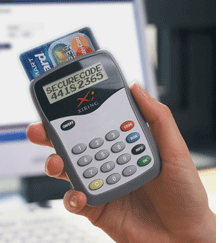
In order to improve their online experience, 32% would feel most confident using a smart card reader to add an extra layer of security, compared to only 5% wanting to use their mobile phone. Online banking does, however, have a better image than e-commerce, with 74% believing that online shopping is less secure than online banking.
Other survey results include:
- Women trust their banks more than men with 59% believing that their bank would protect them from online banking fraud at the time of signing up, compared to just 48% of men.
- The 46 to 55 age bracket trusts banks more than the younger 18-25 group.
- Young people are also more likely to put off shopping online if they’ve been a victim of fraud, with 33% of 18-25 year olds saying it has affected the frequency with which they shop online compared to only 12% of 46-55 year olds.
- A vast majority of respondents, 84%, think their bank should have ultimate responsibility for online banking security, rather than users taking personal responsibility.
The survey by UK consultant company Vanson Bourne questioned 500 adults in the UK in September and October, all of whom bank online at least once a month.